Hermes
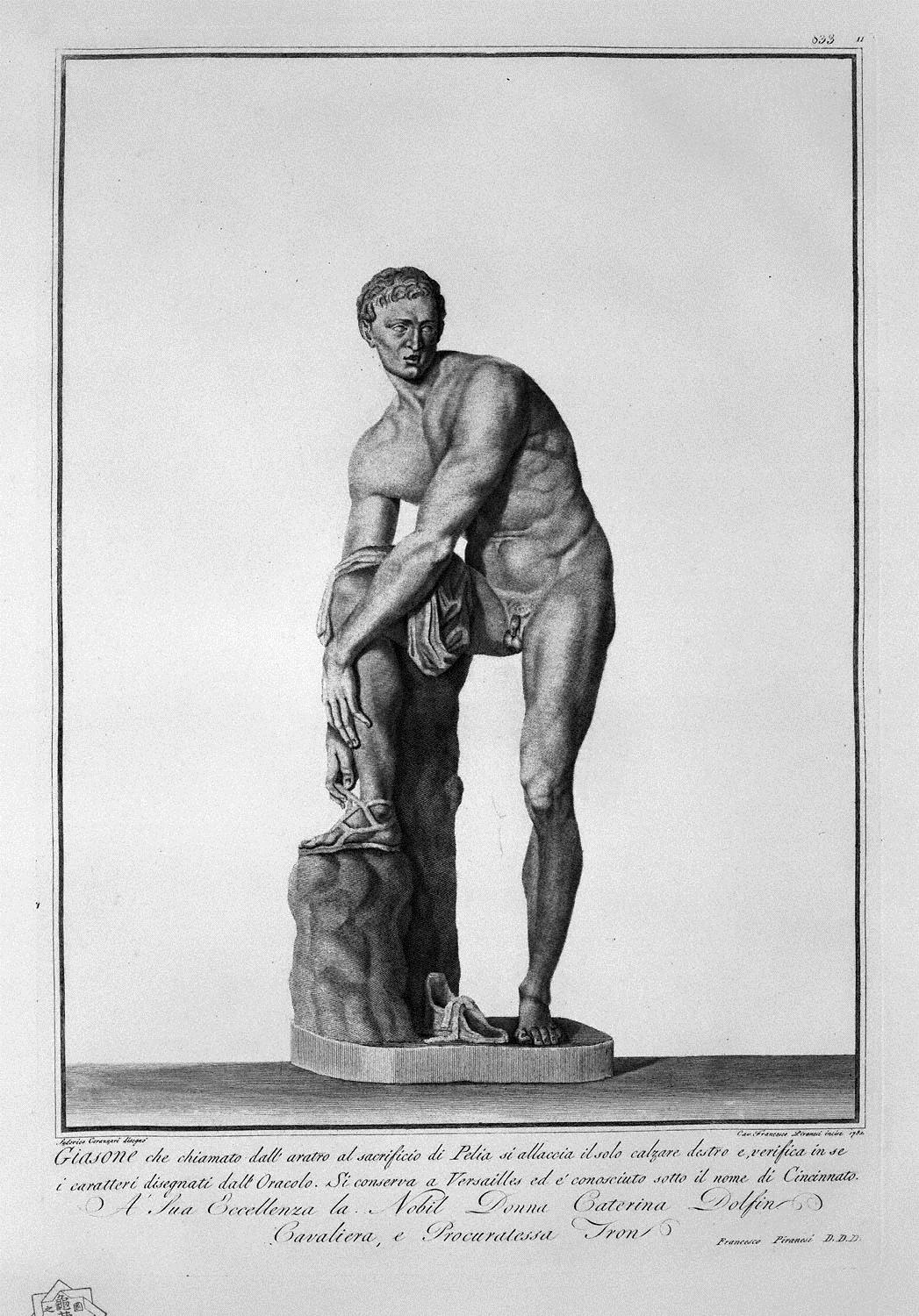
- Artist
- Giovanni Battista Piranesi
- Style
- Neoclassicism
- Genre
- Mythological painting
The painting titled 'Hermes' exemplifies Neoclassicism, an artistic movement inspired by the ideals of classical antiquity. Likely depicting the Greek messenger god Hermes, the work embodies the qualities of Mythological painting, emphasizing balance, clarity, and rational beauty. Emerging in the 18th century during the Enlightenment, Neoclassicism drew upon Greco-Roman themes, influenced by rediscoveries of Pompeii and Herculaneum. This style gained popularity among European artists returning from Italy, and remained prominent into the 19th century, shaping the visual arts' portrayal of mythological subjects.
Related artworks
- Ground plan of the ground floor of the theater and the stage of stable by Giovanni Battista Piranesi
- Genius of Pan by Giovanni Battista Piranesi
- Ground plan of the first precinzione the theater, the `orchestra with its steps, and the pulpit of the scene, and its parts by Giovanni Battista Piranesi
- Scholastica (Bad Dream) by M.C. Escher
- Porta Maria Dell' Ospidale by M.C. Escher
- Scholastica (cover) by M.C. Escher
- Songs of Bilitis by George Barbier
- Roosje Ingen Housz by M.C. Escher
- Scholastica by M.C. Escher
- Scholastica (Flying Witch) by M.C. Escher