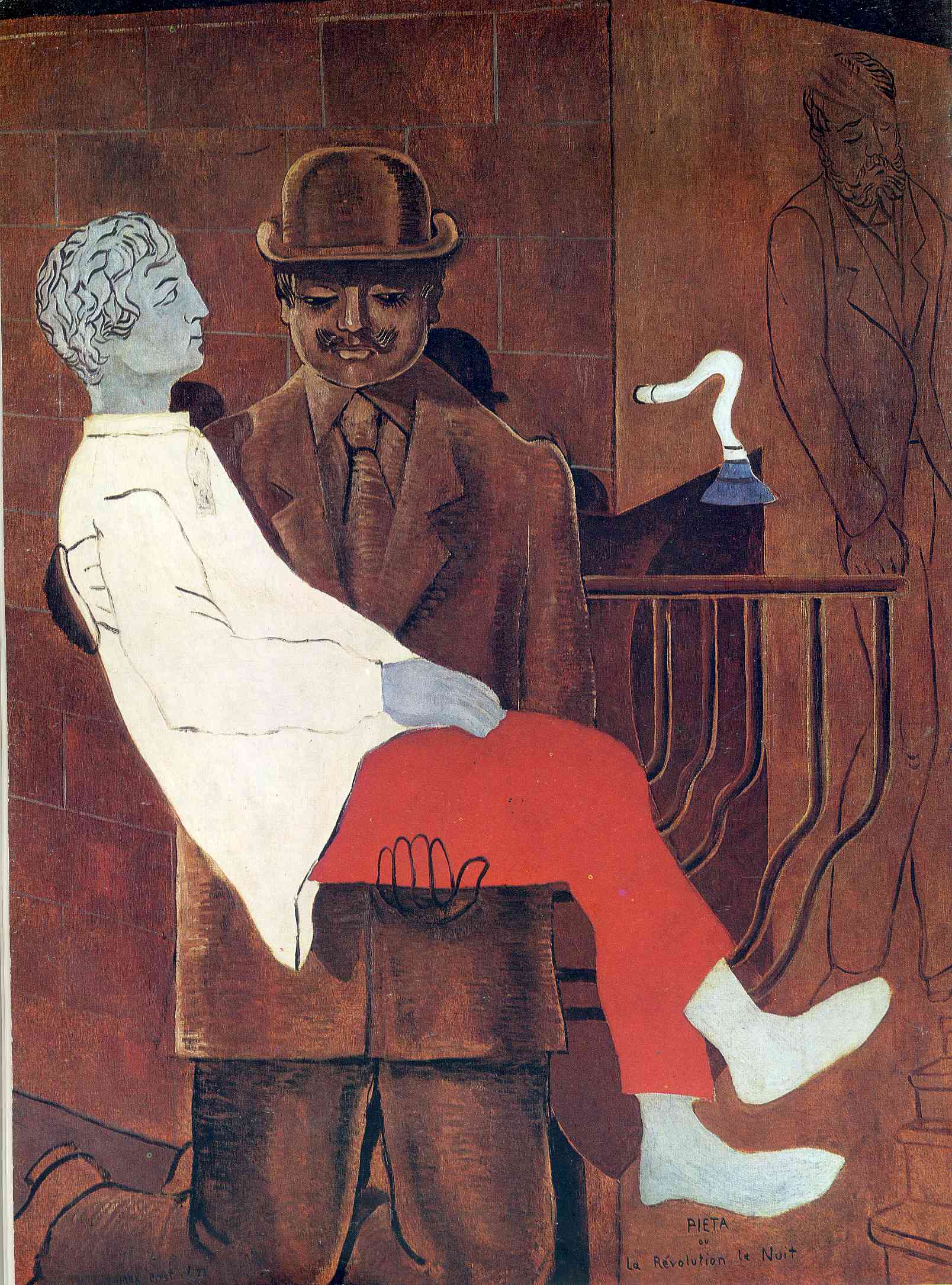
Pieta (Revolution by Night)
- Artist
- Max Ernst
- Date
- 1923 ; Paris , France
- Style
- Surrealism
- Genre
- Symbolic painting
- Location
- Tate Modern
"Piéta (Revolution by Night)" (1923) by German Max Ernst is a compelling symbolic painting created on a canvas using oil paints. As a notable work within Surrealism and Dadaist movement, it vividly blends dreamlike imagery with subconscious themes, characteristic of Ernst's style. The painting's dark and mysterious atmosphere reflects themes of upheaval and sacrifice, inviting viewers into a tense, nocturnal scene that symbolizes political or spiritual revolution. Since 1981, it has been part of the collection at the Tate Gallery in London.
Related artworks
- Temptation of St. Anthony by Max Ernst
- The dog that craps dog wearing well despite the difficult terrain caused by heavy snow in the woman's throat beautiful song of the flesh by Max Ernst
- Of This Men Shall Know Nothing by Max Ernst
- The Antipope by Max Ernst
- The Crucifixion by Luca Signorelli
- The cardinals are dying by Max Ernst
- The Crucifixion by Luca Signorelli
- Legend from the portfolio Revolving Doors by Man Ray
- The Last Judgment (The right part of the composition - The Damned Consigned to Hell; the left part of the composition - The Blessed Taken into Paradise) by Luca Signorelli
- Some animals are illiterate by Max Ernst