The proportions of the human figure (The Vitruvian Man)
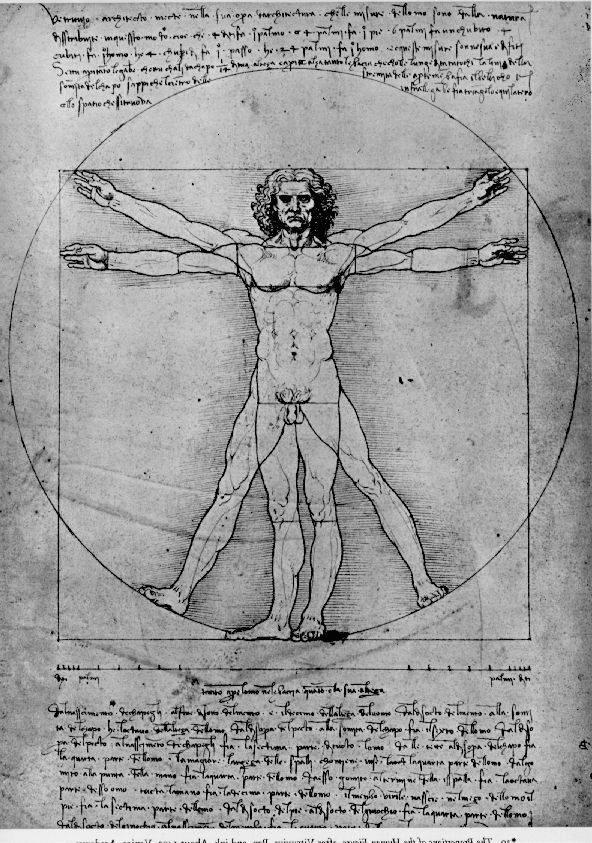
- Artist
- Leonardo da Vinci
- Date
- 1492 ; Milan , Italy
- Style
- High renaissance
- Genre
- Design
- Location
- Galleria dell'Accademia
The Vitruvian Man is a renowned drawing by Leonardo da Vinci, created around 1490 during the High renaissance period. Rendered in ink on paper, it exemplifies an intricate understanding of Design principles, blending artistic mastery with scientific inquiry. Inspired by Roman architect Vitruvius, the sketch depicts a nude male figure in two overlapping positions within a circle and square, symbolizing proportion and harmony. Art historian Carmen C. Bambach describes it as "justly ranked among the all-time iconic images of Western civilization," highlighting its significance as a symbolic synthesis of art and science during the Renaissance era.
Related artworks
- The proportions of the head by Leonardo da Vinci
- Woman's Head by Leonardo da Vinci
- Study of water by Leonardo da Vinci
- Study of proportion by Leonardo da Vinci
- Study on the proportions of head and eyes by Leonardo da Vinci
- The Madonna of the Carnation by Leonardo da Vinci
- Study for the "Burlington House Cartoon" (The Virgin and Child with St. Anne and St. John the Baptist) by Leonardo da Vinci
- Madonna Litta (Madonna and the Child) by Leonardo da Vinci
- The Lady with an Ermine (Cecilia Gallerani) by Leonardo da Vinci
- Study of the Madonna and Child with a Cat by Leonardo da Vinci